Some Context as to Why Richwater Films Ceased Operations in 2016
This had been the website for Richwater Films, a British film production and financing company and distributor, launched in 2013 by Jonathan Sothcott, which specialized in crime, thriller and action films. Richwater Films ceased operations in 2016 amidst a number of allegations.
Did fraud occur? There is no record of the outcome from the allegations, although at the time there were several news articles ( metro.co.uk/ Carry On film producer dogged by financial disputes in damning Facebook comment by Olivia Waring / Monday 23 May 2016 ) & (Yahoo News article, Carry On Reboot Producer Under Investigation For Fraud, by Mike P Williams / May 22, 2016) that could be found including the one below. And there were certainly some folks so angry they created a facebook page.
This site now should be viewed as a historical record with content from the site's archived pages and other outside sources for context.
Circa 2016
British 'Carry On' Producer at Center of Series of Fraud Allegations
5/30/2016 by Alex Ritman / www.hollywoodreporter.com
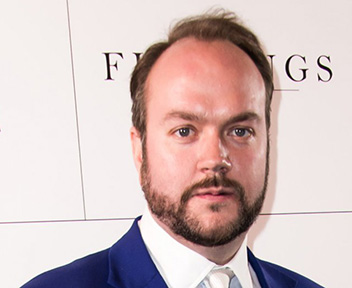

Getty Images / Jonathan Sothcott
A Facebook page set up against Jonathan Sothcott is "just the tip of the iceberg," claims one former employee, as several others come forward with allegations of scores of unpaid wages and major financial mismanagement.
British film fans of a certain age have a special place in their hearts for the Carry On movies.
The silly, slightly bawdy comedy franchise, which produced 31 films between 1958 and 1992, harkens back to a simpler time: when sexual provocation meant a wee double entendre and a flash of boob. Never a major success outside the country — the films were filled with in-jokes about the National Health Service and English history — the Carry On movies remain a British institution, as beloved as warm beer and the brand of football played with a round ball without using your hands.
So news last week that a British producer was set to revive the films was greeted with a wave of nostalgia by the local press, who devoted countless column inches to the story and reveled in the prospect of the first new Carry On title in 25 years.
A look behind the headlines, however, shows how treacherous such nostalgia can be. Consider Jonathan Sothcott, the producer at the center of the Carry On reboot and a man, according to a number of industry figures, with a trail of bad debt and bankrupt film companies to his name.
Several former employees of Sothcott have accused the producer of scamming them and countless others working on the lower rungs of the British film industry as he moved from one title to another. Indeed, a Facebook page entitled "Jonathan Sothcott Fraud Investigation,"was set up anonymously three months ago encouraging alleged victims to get in touch. The page has already pushed some 250 actors, writers, extras, consultants and others come forward. Many of the page's followers have detailed how they still haven’t been paid, sometimes years after working on Sothcott’s films.
But the matter isn’t simply one for grievances on social media. The British police has also been looking into matters, THR has learned, along with the governmental tax department HMRC. While the HMRC never comments on investigations, it has been sent evidence — from both individuals and the police — and provided a case number.
As one producer, who wished to remain unnamed, tells THR: “We were just waiting for him to do something newsworthy, and then came the Carry Onstory.”
Filmmaker J.K. Amalou was among the first to file a complaint with the police. The director shot underworld action film Assassin, which Sothcott produced, in 2013. The movie starred Danny Dyer, a familiar face from low-budget British gangster titles, and now a star on long-running BBC soap EastEnders.
To make the movie, which had a budget of $220,000 (£150,000), Sothcott set up Assassin Productions Limited, a so-called Special Purpose Vehicle (SPV) company and placed the money from the film's investors — £140,000 — into it. This is standard practice in the film industry. SPV's are a kind of firewall against liabilities. If a film goes way over budget, or flops badly, the SPV goes bust, not the producer's main production company.
Amalou, however, soon became suspicious that Sothcott was using Assassin Productions Limited as his own private piggy bank. Sothcott claimed Amalou had gone £50,000 over budget on the movie but, according to the director, evaded meetings to discuss the problem. When Amalou tried to check the company finances, he found Sothcott had failed to file the required bank mandate giving him access. But when he eventually did get into the accounts, the director said he immediately spotted evidence of fraud.
"The minute I looked at the bank statement, I saw straight away that he was taking huge amounts from the account," he tells THR. "I saw companies that had no connection with my film whatsoever. It was obvious he was using the bank account — my investors’ money, my film’s money — to do other things."
Among the outgoings were expensive lunches, events organizers and, notably, transfers to other film companies set up by Sothcott and payments for invoices on other films, including another gangland thriller, Top Dog.
Dougie Brimson, whom Sothcott hired to write and co-produce Top Dog (adapted from Brimson’s own novel), said he had similar suspicions of wrongdoing connected to that film and its SPV, Top Dog Limited.
Although he was a director and shareholder of the company, Brimson says that he was refused access to all bank statements and invoices. He estimates that "at least £487,000" was raised for the film, including a £350,000 pre-sale to Universal Pictures.
"Top Dog Ltd was more than well capitalized," he says, suggesting that similar films were made for around £200,000-£250,000. And yet the company was eventually declared bankrupt, with Brimson saying that it owed "tens of thousands of pounds."
Although he never had full access to the finances, Brimson says he managed to obtain evidence of false accounting, including an invoice of £1,500 entered into the accounts as £15,000 and a fee for the director Martin Kemp (formerly of U.K. pop music group Spandau Ballet) almost 50 percent higher than his agreed remuneration.
Brimson asserts that Kemp was still owed money from Assassin, in which he also starred, suggesting that the inflated figure from Top Dog could well have been an attempt to pay off this debt.
Another individual paid from the accounts of Top Dog was Ricci Harnett. Like Kemp, Harnett starred in the film, and was paid in full for his work.
But when Sothcott hired him to make his directing debut on another title, Reign of the General, Harnett saw that part of his fee was also paid out of Top Dog Ltd's accounts. Other money, he says, came from the account of WSKTOW, another now-defunct SPV set up for We Still Kill the Old Way, yet another London gangster film produced by Sothcott.
Harnett said he had to return to work as a motorcycle courier and relied on support from his family to pay the legal bills in his suit that, finally, resulted him him getting the money he was owed.
Another director, Jonathan Glendening, tells THR he was three weeks into shooting the Sothcott-produced comedy-horror Strippers v. Werewolves before he eventually received a £4,000 payment — the only money he received for his work — via former Sothcott collaborator Simon Phillips (who now tells THR he is also owed money by the producer) and from a different company account.
After the film's wrap party, in which the director says Sothcott praised him and his work on the film, Glendening claims he was fired for "gross incompetence," (something Sothcott has confirmed to THR) locked out of the edit and told his "fantastic footage was suddenly awful." Glendening also asserts that one of the principal actresses in the film was fired after coming out in support of an unpaid makeup artist, with Sothcott casting his then-girlfriend in a new part.
The final "awful" release, which still bares Glendening's name, was rushed out without effects, and the director says, looks "remarkably different" to the original scenes he cut himself.
“But that’s not the point, the point is I shot the entire film for him and wasn’t paid for it," he adds.
Reign of the General, Top Dog, We Still Kill the Old Way and others, including Age of Kill, were made through Sothcott’s production banner Richwater Films, launched in 2013, and now — like many of the producer’s outfits — dissolved. Another one of Sothcott’s now defunct outfits, Black and Blue Films Limited — which was behind Strippers v. Werewolves — was put into liquidation with reported debts of more than £500,000. Sothcott is believed to have had at least 10 of his companies dissolved, and has resigned from four others (including Assassin Productions Limited).
“Ultimately, I know his scam,” says Amalou. “He sets up limited companies (and) raises some money knowing full well that he’ll have enough to deliver a film to a distributor, but not enough to pay everyone involved.”
Among the scores to have contacted the Facebook page is an extras agency that says it is owed £10,000, a cinematographer who claims to be owed £6,000 and a catering company owed “many thousands.” Several have said that when they put their grievances online they were instantly warned by Sothcott's legal council. "When we posted something on Twitter about us he sent us a lawyers letter saying we were bad-mouthing him," claims one.
Amalou says that in order to pay those owed on Assassin (Sothcott eventually resigned from the company, leaving him to deal with the debts), he had to sell off his 20 percent stake in the film.
“So I have no shares whatsoever. I didn’t make a penny from the film, even though it’s now making money.”
When media reports of the financial disputes surrounding Sothcott first emerged earlier this month, the producer told The Mail of Sunday that the Facebook page had been set up by “some stalker making it all up," claiming that “none of it’s true — I don’t even know who the nutter is."
But the volume of complaints being leveled against the individual indicate that it’s far from just one stalker, and that the issue has been going on for a number of years (one report of unpaid wages dates back to 2010 zombie horror film Devil’s Playground).
In a response to THR, Sothcott rejects the allegations made against him in this article, claiming that he himself is owed money from Assassin and denies he attempted to block Amalou from seeing the company accounts. He also asserts that he resigned from the company "because I simply didn’t want my name associated with such a terrible film." (THR has seen evidence that Sothcott attempted to buy himself back into the "terrible" film as a producer)
Sothcott also rejects that any threats have been made — beyond legal letters "relating to defamation" to Brimson and Amalou — to any individual regarding any grievances, and even denies to have received any claims for outstanding sums on any of his films, something in direct conflict with the many who have spoken out via the Facebook page.
Among the suggested reasons why Sothcott has seemingly managed to avoid any major legal proceedings thus far is that those left chasing unpaid invoices aren’t millionaire film executives with teams of sharp-suited legal experts at their disposal.
“I could go after Sothcott in a big way with my lawyer, but it would cost me a minimum of £30,000,” says Amalou, who filed a report with the police some 18 months ago.
Sothcott's legal representative has a letter dated May 20 from the regarding the police investigation into him that says the case will "not be proceeded with," but THR has learned that some of the evidence gathered has been passed from the police to British tax authorities.
Now, while the average behind-the-scenes employee on one of Sothcott’s low-budget titles might be put off from chasing a few thousand pounds of missing payments due to the costs involved, HMRC wields considerably more clout. Accusations that Sothcott has abused the U.K.’s producer tax relief, which is now as much as 25 percent of production expenditures, could see tax investigators move in. Sothcott says this is "absolutely not true and a serious allegation," something rejected by Amalou, who points to payments made to cast and crew – such as Kemp and Harnett – from other film accounts and the movement of money between SVPs.
"He’s pretending that stuff is connected to the film and is claiming the 20-25 percent off it, which the tax man gives back to him," says the director, while Glendening adds that he has "always wondered" if tax relief was claimed on his unpaid director’s fee.
What happens with Sothcott's proposed Carry On titles remains to be seen, but it's clear that there are many who would prefer the producer wasn't allowed to have any further involvement in filmmaking, let alone on such an iconic franchise.
"He is a blight on our industry," one producer told THR. "His actions damage the legitimate attempts by every independent producer in the country to make films and, in some ways, give us all a bad name."
~~~~~~~~~~~~~~~~~~~~~~~~~~~~~~~
2019
A Different Opinion About Fraud from producer Jonathan Sothcott
Producer Jonathan Sothcott: EIS for film production is total fraud
By Ldn-Post May 8, 2019
The London Post
As the Enterprise Investment Scheme celebrates its 25th anniversary it is casting a dark cloud over the British film industry, which it has become the single most important source of funding for.
The scheme, which allows qualifying investors to write off 30% of their investment against their income tax (along with other incentives) has been an incredibly popular one and has allowed hundreds of British films to be made. The wheels appeared to come off last year, however, when the rules were changed with the introduction of a ‘risk to capital condition’ which effectively precluded investments in film production, even though HMRC’s guidelines suggest it is still achievable.
Producers need to receive ‘Advance Assurance’ from HMRC that their business plan will qualify for EIS tax relief and since Spring 2018 what initially appeared to be long delays soon became a log jam of rejections. Earlier this year, Ingenious, one of – if not the – biggest source of EIS funding for films – pulled all of their EIS media offerings and while some producers are prepared to wait more than a year for a decision on whether they qualify from HMRC, many others think the game is up.
American movie bible Variety recently ran an article about fund Great Point Media’s new (media, but non-production) EIS investments but noted “The Enterprise Investment Scheme structure in the U.K. has been extensively used to help finance independent film, but following an overhaul of the rules by British authorities the relevance of EIS funding for film and TV has been questioned.”
Talking exclusively to us, Jonathan Sothcott, one of the UK’s most established and prolific independent film producers and an expert on tax efficient film investment gave us his views on the uncertain film finance/EIS landscape. “I think the idea that there are hoops you can jump through to qualify film production for EIS is total fraud. It is dead in the water and the industry either doesn’t want to or simply hasn’t woken up to it yet. The film companies getting the advance assurance are basically technology offerings in a media wrapper which just aren’t sexy enough for investors.”
HMRC did not respond to our request for clarification but a tax specialist at a leading law firm, who wished to remain anonymous told us: “EIS for film production is dead and buried. Too many producers spoiled it with pre-sales which basically secured investors’ money so they were getting tax relief with no risk. But its frustrating because I think the DCMS have a duty to support the British Film Industry and there’s no sign of any alternative structure. There’s going to be huge fall out from this.”
Sothcott also told us “it really is the era of investor beware – there are some naughty producers claiming to have advance assurance for film production and even listing the benefits on their websites. They’re either telling porkies or out to rob people which is sadly all too common in this game.”
Of course, there’s still the UK Film Producer’s Tax Credit, a rebate producers can claim back from HMRC once production wraps, usually equating to around 20% of the budget. Although some producers use this as ‘first money back’ for investors, it lacks the old EIS benefits of no capital gains tax, loss relief if the business fails and even the basic security of comfort from HMRC. City rumours suggest that the Tax Credit could be raised to as much as 30% but Sothcott is sceptical “even if this was true, it will benefit American films being made at our studios more than anyone else – it’s a rebate on spend, not an incentive to invest in homegrown creativity. There’s an important difference. Similarly there’s talk of more soft money from the British Film Institute but to me that goes completely against the grain of being an independent. I want to make films my audience wants, not films some public body approves.”
We expect this issue to become more prominent after the hoopla of Cannes subsides as without an alternative the independent sector of the British film industry could well be headed for a crisis.
What to Think About This 2016 News
It was distressing to learn about the allegations against Jonathan Sothcott. Several of my friends within the film industry were really excited when he launched his production company. They too were interested in one day having their own production company and actually followed an number of nascent companies to see if they would survive in an industry that is notoriously difficult to succeed in unless you have backers/ investors with deep pockets.
My friends and I are still in the film industry, but now working for production companies here in NYC. I work in the art department and really love it. Every day brings a new challenge, some of which are really difficult and others are pretty easy. Today I sourced wigs which was really fun. I have my favorite online wig boutique, ElegantWigs.com. I love Michael who handles most of the customer service. He's a doll and soooo knowledgeable. Personally I really like wigs in fantasy colors, but for this request I was told to get some really good looking styles. So I turned to the Raquel Welch wig brand which seems so apropos since Raquel is such a celebrity with high name recognition even now, within the film industry. You must check this wig brand out. The styles are soooo delicious. I needed to get wigs that could be heat styled so I first perused the Raquel Welch heat friendly synthetic styles. I had a budget so I knew that the human hair wigs would most likely be out because of cost. But it turned out that I was wrong. All the lead female characters were to have human hair wigs so my boss said. What fun! However I decided to select both synthetic heat friendly and human hair styles in a variety of short to long styles and created a power point presentation. Once the styles were approved then I would select the color. Fortunately there are so many colors offered in each style I was not too concerned on that front.
Two weeks later after a number of discussions I get the OK and I call Micheal with the styles are chosen along with colors. He had to check the Raquel Welch inventory list to make sure the colors were available. Fortunately none were on back order. I even snuck in a Raquel Welch wig, Dare to Be, in a fantasy color with dark roots and shades of light pink hues for myself. I'm fast at my job which is important in this industry. All wigs arrived within a week, wigs were assessed, tried on, styled, and then set on mannequin heads to await the start of filming. I can now check this task off my assignment list. Simple! Well, sort of. Now onto the next...
~~~~~~~~~~~~~~~~~~~~~~~~~~~~~~~
ABOUT RICHWATER FILMS!
Launched in January 2013, RICHWATER FILMS is a new independent British production and financing company dedicated to making the very best in high concept commercial movies. The company also has interests in publishing, music and multimedia.
Led by established, prolific producer Jonathan Sothcott, Richwater strives to work with the very best talent available to make films that truly deliver to audiences around the world.
Here you will find out more about our forthcoming films, background on the business, and details of how you can get involved.
"Jonathan Sothcott is carving out a niche as one of the most prolific producers of British action movies"
A Bit of History about RICHWATER FILMS
Launched in January 2013 by award-winning British film producer and entrepreneur Jonathan Sothcott, RICHWATER FILMS has already established itself as a major player on the British independent film scene. With interests in publishing and multimedia and a groundbreaking output deal with US studio Anchor Bay, Richwater is so much more than just a film company.
"Jonathan Sothcott is carving out a niche as one of the most prolific producers of British action movies" - THE HOLLYWOOD REPORTER
Over the past 5 years, Jonathan has produced films starring the likes of Ray Winstone, Richard E Grant, Mark Hamill, Robert Englund, Danny Dyer, Rik Mayall and Steven Berkoff. A lifelong film aficionado, Jonathan relishes making movies – producing is a real passion for him, as well as a business.
He launched Richwater to make ambitious, commercially viable films that have a distinct voice, reach a wide audience and embrace recent advances in distribution channels.
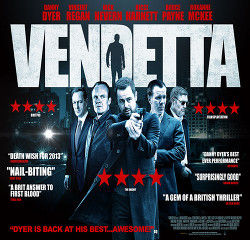
For the company's first project, vigilante actioner VENDETTA, Jonathan pulled out all the stops and assembled a stellar ensemble cast including his close friend Danny Dyer (The Football Factory, The Business) - with whom he has worked some half a dozen times – Vincent Regan (Bonded By Blood), Bruce Payne (Passenger 57), Ricci Harnett (Rise of the Footsoldier), Nick Nevern (White Collar Hooligan) and Roxanne McKee (Game of Thrones), despite the low budget. This is indicative of the ‘family’ atmosphere inherent in the company’s filmmaking philosophy, with actors, director and writers working fluidly together to make the very best films possible.
The company’s second film, TOP DOG (Universal Pictures), has now been released, and both WE STILL KILL THE OLD WAY and AGE OF KILL are both in the can.
Looking to the future, Richwater aims to produce and/or co-produce 6 to 8 movies each year across a range of budget levels and largely - though not solely - in the action and thriller genres. Richwater’s deal with independent publisher Caffeine Nights will ensure that its properties are represented on bookshelves in the forms of novelisations and graphic novels, as well as in special non-fiction publications. Also this year, the company is looking to expand into television production.
Richwater is committed to working with the very best talent in the creative industries and Jonathan and his team are constantly seeking new material and opportunities to expand the company’s reach.


MEET THE FORMER TEAM from 2016
The board of Richwater Films reflects the dynamic, entrepreneurial spirit of the company, with a combined experience of over 30 years in the entertainment industries and high calibre expertise encompassing film production, marketing, acquisitions, development, distribution, financing and public relations.
JONATHAN SOTHCOTT CEO & FOUNDER
Jonathan is one of the UK's most dynamic, proactive filmmakers and is recognized as a successful independent entrepreneur throughout the movie industry as well as in the wider business community. Formerly Head of Programming at The Horror Channel, he entered the film industry in 2009 and has since produced some two dozen feature films. He won 'Best Producer' two years in a row at the British Horror Film Awards and the British Lion Award at the British Film Festival in 2012. Away from movies, Jonathan was Executive Producer on the monster special interest DVD hit Danny Dyer's Football Foul Ups.
Twitter @sothcott
ADAM STEPHEN KELLY MARKETING EXECUTIVE</p>
An emerging filmmaker in his own right, Adam is also a film journalist, first published in print at age 16. Kelly's writing, which includes over 700 published articles, interviews, features and reviews, has been read by millions around the world in a variety of outlets, from Rolling Stone to Ain't It Cool News. He has conducted interviews with the likes of Sir Roger Moore, Simon Pegg, Ronan Keating and Kelly Brook. He is the writer/director of critically-acclaimed short Done In, which premiered as part of the 2014 Cannes Film Festival.
Twitter @adz_kelly
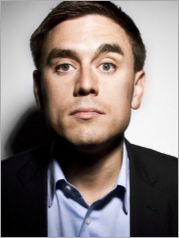
JAMES MULLINGER SVP NORTH AMERICA
James is a respected journalist and critically acclaimed stand up comedian. He was the co-author of bestselling book The Films Of Danny Dyer with Richwater CEO Jonathan Sothcott. As a journalist he has written for The Guardian, Men’s Health, Radio Times, The Erotic Review and worked for GQ Magazine for 14 years where he remains as Comedy Editor.
James now lives in Atlantic Canada heading up Richwater’s North American office when not touring with his comedy shows. London’s Evening Standard described him as “something of a sensation” and The Huffington Post reviewed his sold out 2013 tour stating: “Compulsive viewing. A very funny man with a big future ahead of him.” Time Out have described him as “Excellent, very funny, skilful” and recently commented that: “He’s a powerful man, that Mullinger.” James' new stand up show is entitled How A Middle Class Comedian Fell In Love With Danny Dyer and will be touring all over the UK from October 2014.
NEIL JONES HEAD OF PRODUCTION
Award-winning filmmaker Neil Jones has directed such stars as Rutger Hauer, Tamer Hassan, Craig Fairbrass and Doug Bradley. His critically-acclaimed boxing biopic Risen won a BAFTA for Best Actor. As a producer at Richwater, Neil has overseen We Still Kill the Old Way and Age of Kill, which he also directed.
Twitter: @njonesfilms
Their FILMS

REVIEWS
****
"This is the overdue Danny Dyer movie we thought we’d never see."
Britpic
"Death Wish for 2013"
Loaded Magazine
"Nail-biting"
Daily Star
"A Brit answer to First Blood"
Total Film
"Cinematic class"
The Sun
****
The Shiznit
"Ronseal cinema"
Empire
"Danny Dyer's best ever performance"<
HEYUGUYS
"Surprisingly good"
Virgin Movies
"A gem of a British Thriller"
UK Film News
"Dyer is back to his best... Awesome"
GQ
****
"Incredibly tense, disturbing and thoroughly entertaining. This is Hard R stuff."<
The Action Elite
"Each set piece is uniquely twisted"
Britflicks
****
"With an attractive solid script that fizzes along it is easy to see why Richwater Films stable of actors all wanted to be on display here" Filmsploitation
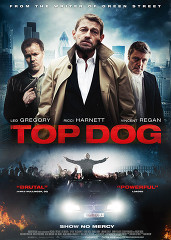
TOP DOG
SYNOPSIS
Hooligan boss Billy Evans has it all - a successful business, a beautiful family and respect on the terraces. Even better, the police have never been able to touch him. But when he butts heads with gangster Mickey over a backstreet protection racket, Billy soon finds himself out of his depth as events rapidly escalate and he finds that he has taken on far more than he can chew.
CAST
Leo Gregory …. Billy Evans
Ricci Harnett … Mickey
Vincent Regan … Mr Watson
George Russo … Hawk
Danielle Brent … Sam
Jason Flemyng … Dan
Lorraine Stanley … Julie
Susan Penhaligon … Sal
Written by Dougie Brimson, based on his cult novel.
Directed by Martin Kemp
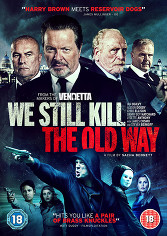
WE STILL KILL THE OLD WAY
SYNOPSIS
When retired East End villain CHARLIE ARCHER is murdered by a feral street gang whilst attempting to stop them attacking a young girl, his brother RITCHIE ARCHER returns to London from Spain to investigate. Retired to the costa del crime for 30 years, Ritchie doesn’t recognise this new London of post code gangs, ASBOS and a culture of fear on the streets. With the police investigation lead by DI TAYLOR thwarted at every turn and drawing blank after blank, Ritchie decides to take the law into his own hands and bring his old school justice back to the streets of East London. Rounding up his old firm, he leads a vigilante crusade against the vicious young criminals, using every grisly method at his disposal to find and punish his brother’s killers. A vicious street war follows, with no prisoners taken on either side, leading to a dramatic conclusion as the feral youths lay siege to a hospital Ritchie’s firm is holed up in. They’re outgunned and outnumbered, but this firm has never been outclassed yet!
CAST
Ian Ogilvy … Ritchie Archer
Steven Berkoff … Charlie Archer
Alison Doody … Susan Taylor
Lysette Anthony … Lizzie
James Cosmo … Arthur
Danny-Boy Hatchard … Aaron
Dani Dyer … Lauren
Red Madrell … DK
Chris Ellison … Roy
Tony Denham … Butch
Nicky Henson … Houghton
Written by Dougie Brimson & Gary Lawrence and Sacha Bennett
Produced by Jonathan Sothcott and Neil Jones
Directed by Sacha Bennett

More Background On RichWaterFilms.com
Richwater Films was once one of the most recognizable names in the world of low-budget British crime and action cinema. Active primarily between 2013 and 2016, the company specialized in gritty urban thrillers, vigilante dramas, gangster films, and exploitation-style action movies that appealed to audiences who enjoyed hard-edged British genre filmmaking. Founded by producer Jonathan Sothcott, Richwater Films quickly became associated with a distinctive style of filmmaking that combined recognizable British television and film personalities with fast-paced production schedules and commercially driven storytelling.
For a brief period, the company appeared poised to become a major player in the British independent film scene. Richwater produced and distributed films featuring actors such as Danny Dyer, Steven Berkoff, Jason Flemyng, Ian Ogilvy, Ricci Harnett, and Vincent Regan. The company promoted itself as ambitious, entrepreneurial, and highly prolific, with plans to expand into publishing, multimedia, and television production. Trade publications and entertainment websites frequently discussed Richwater’s aggressive output and Jonathan Sothcott’s reputation for rapidly assembling commercially viable productions.
However, beneath the surface, the company was becoming increasingly controversial. Numerous allegations involving unpaid wages, financial disputes, accounting irregularities, and mismanagement eventually overwhelmed the company’s reputation. By 2016, Richwater Films had effectively ceased operations amid public criticism, investigative reporting, legal threats, and broader industry scrutiny.
Today, RichWaterFilms.com survives largely as a historical snapshot of a turbulent era in British independent cinema. The website offers insight into both the aspirations and the instability of the low-budget film industry during the 2010s.
Founding of Richwater Films
Richwater Films was launched in January 2013 by British producer and entrepreneur Jonathan Sothcott. The company marketed itself as an independent British production and financing company focused on creating “high concept commercial movies.” Richwater emphasized genre filmmaking, especially crime thrillers, action films, and urban dramas that could appeal to both domestic British audiences and international markets.
The company emerged during a time when British gangster films remained commercially viable in the direct-to-video and streaming markets. Since the success of movies such as “The Football Factory,” “Rise of the Footsoldier,” “Layer Cake,” and “Sexy Beast,” there had been sustained demand for gritty British crime stories featuring football hooligan culture, East End gangsters, vigilante justice, and urban violence.
Richwater sought to capitalize on that market by producing films quickly and relatively cheaply while leveraging recognizable actors and aggressive marketing. The company positioned itself as both entrepreneurial and creatively ambitious, claiming it wanted to make films with “distinct voices” while embracing new distribution methods and digital platforms.
The company’s branding reflected this strategy. Archived versions of RichWaterFilms.com presented the company as energetic, modern, and expansion-oriented. Beyond film production, Richwater also expressed ambitions in publishing, music, multimedia, and eventually television production.
Jonathan Sothcott and His Role
Jonathan Sothcott was the driving force behind Richwater Films. Prior to founding the company, he had already established himself within British independent genre cinema. Sothcott had experience in television programming, including work at The Horror Channel, and he became known for producing a high volume of low-budget features within a short period.
He cultivated an image as an outspoken entrepreneur and champion of commercial British filmmaking. Unlike producers focused on prestige arthouse cinema, Sothcott openly embraced populist entertainment aimed at mass audiences who enjoyed action, horror, and crime films.
Trade publications frequently described him as one of the most prolific producers working in British genre cinema. The Hollywood Reporter once noted that he was “carving out a niche as one of the most prolific producers of British action movies.” This reputation helped Richwater attract actors and collaborators who were already well known within British cult cinema circles.
Sothcott also positioned himself as a defender of independent filmmaking against what he saw as excessive institutional control from public funding bodies and government-backed film initiatives. In interviews, he emphasized commercial viability over prestige filmmaking and often criticized aspects of the British funding system.
At the same time, his aggressive production style and rapid pace drew skepticism from some industry insiders long before the controversies became public.
Richwater’s Business Model
Richwater Films operated using a production structure common in low-budget independent filmmaking. Separate limited companies, often referred to as Special Purpose Vehicles (SPVs), were reportedly created for individual productions. This structure is standard within the film industry because it isolates liabilities for each project.
The company attempted to maximize efficiency by producing films rapidly, often with overlapping casts, crews, and creative personnel. Many actors worked repeatedly with Richwater or with Jonathan Sothcott personally. The company promoted this recurring collaboration as evidence of a “family atmosphere” within its productions.
Richwater also focused heavily on recognizable branding within British crime cinema. Its films frequently featured:
- Former football hooligan themes
- East End gangsters
- Vigilante revenge stories
- Urban violence
- Retired criminals confronting modern crime culture
- Corrupt institutions
- Brutal street justice
This approach resonated with audiences already familiar with British direct-to-video crime films.
The company also pursued distribution deals that could ensure visibility beyond independent cinemas. One notable partnership involved Anchor Bay, while Universal Pictures handled distribution for some Richwater-associated titles.
Key Films Produced by Richwater
Vendetta
One of Richwater’s earliest and most recognizable productions was “Vendetta,” a vigilante thriller starring Danny Dyer. The film centered around themes of revenge and justice, following a protagonist seeking violent retribution after personal tragedy.
“Vendetta” featured a cast including Vincent Regan, Bruce Payne, Ricci Harnett, Nick Nevern, and Roxanne McKee. Richwater heavily promoted the film as a gritty British answer to American revenge thrillers such as “Death Wish” and “First Blood.”
Reviews from genre publications were surprisingly positive for a low-budget British action film. Critics praised Danny Dyer’s performance and the movie’s intensity. Some publications described it as “nail-biting” and “surprisingly good,” while others called it one of Dyer’s best performances.
The movie helped establish Richwater’s reputation as a serious participant in British action cinema.
Top Dog
“Top Dog” became another significant Richwater production. Based on a novel by Dougie Brimson, the film explored football hooligan culture, gang conflict, and organized crime.
The story followed hooligan leader Billy Evans as he became embroiled in escalating criminal violence. The cast included Leo Gregory, Ricci Harnett, Vincent Regan, Jason Flemyng, and Danielle Brent.
The film fit squarely within the British hooligan-crime subgenre that had remained commercially popular since the early 2000s.
Although “Top Dog” attracted an audience among fans of British gangster cinema, it later became heavily associated with allegations surrounding the company’s finances and accounting practices.
We Still Kill the Old Way
Perhaps Richwater’s best-known production was “We Still Kill the Old Way,” a violent vigilante thriller involving retired East End gangsters taking revenge against modern street criminals.
The film starred Ian Ogilvy, Steven Berkoff, Alison Doody, James Cosmo, and Dani Dyer. The story contrasted “old-school” criminal codes with contemporary youth gang violence in London.
The film resonated strongly with audiences interested in nostalgia for traditional British gangster archetypes. Its themes of vigilante justice, generational conflict, and urban decay aligned closely with the concerns and aesthetics common in British exploitation cinema.
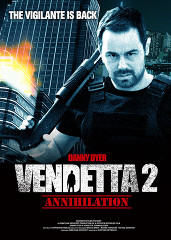
The success of the film eventually led to a sequel, further cementing its status within the genre.
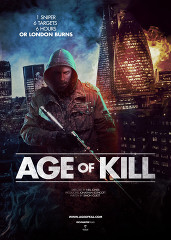
Age of Kill
“Age of Kill” represented Richwater’s attempt to move closer to international action-thriller territory. Starring Martin Kemp and Patrick Bergin, the film involved terrorism, assassinations, and high-stakes action sequences.
Although still modestly budgeted, the movie demonstrated Richwater’s efforts to broaden beyond strictly hooligan and East End crime narratives.
Richwater’s Creative Identity
Richwater Films developed a highly recognizable identity within British independent cinema.
The company specialized in:
- Hard-edged urban realism
- Violent vigilante themes
- Gangster nostalgia
- Action-oriented pacing
- Direct commercial appeal
- Familiar British cult actors
Unlike prestige British cinema focused on social realism or literary adaptation, Richwater embraced exploitation-inspired storytelling. The films were designed primarily for entertainment rather than awards recognition.
The company also reflected broader cultural fascination with British gangster mythology. Many Richwater films romanticized or mythologized older criminal codes while portraying modern urban violence as chaotic and morally empty.
This appealed to audiences nostalgic for earlier British crime films and television dramas.
Media Coverage and Industry Reputation
For several years, Richwater Films attracted extensive media attention within entertainment journalism and genre-film communities.
Industry publications frequently covered:
- New film announcements
- Casting decisions
- Distribution partnerships
- Festival appearances
- Jonathan Sothcott interviews
- Expansion plans
The company benefited from the visibility of recurring collaborators such as Danny Dyer, who already had a substantial fanbase through both film and television.
Richwater productions were often discussed on genre-film websites, British film blogs, DVD review platforms, and entertainment magazines that focused on action and cult cinema.
However, as allegations surrounding the company intensified, media coverage shifted dramatically.
Allegations and Controversies
By 2016, Richwater Films had become embroiled in serious controversy.
Multiple former employees, filmmakers, actors, and crew members publicly alleged:
- Unpaid wages
- Outstanding invoices
- Financial mismanagement
- Accounting irregularities
- Misuse of production funds
- False accounting
- Intimidation through legal threats
Several disputes centered around SPV production companies established for individual films.
Director J.K. Amalou publicly accused Jonathan Sothcott of improperly using funds associated with the production company behind “Assassin.” Amalou alleged that investor money intended for the film had been redirected toward unrelated expenses and other productions.
Writer and producer Dougie Brimson raised concerns regarding the finances of “Top Dog,” claiming that despite substantial funding and distribution support, the production company ultimately collapsed while still owing significant debts.
Additional allegations emerged from directors, extras agencies, makeup artists, cinematographers, catering companies, and actors who claimed they had not been paid for their work.
One particularly damaging development was the creation of a Facebook page dedicated to gathering complaints and allegations from individuals claiming financial harm connected to Sothcott’s productions. Reports suggested that hundreds of people contacted the page.
The controversy quickly spread through British entertainment journalism.
Investigations and Legal Issues
Reports indicated that British police and HM Revenue & Customs (HMRC) examined allegations connected to financial management and film tax relief claims.
Questions reportedly arose regarding:
- Movement of funds between SPV accounts
- Film production tax credits
- Production expenditures
- Cross-company payments
Jonathan Sothcott denied wrongdoing and publicly rejected many allegations. He argued that claims against him were exaggerated or false and maintained that he himself had suffered financially within certain productions.
He also criticized aspects of the British film financing system, particularly the Enterprise Investment Scheme (EIS), which had become a major funding mechanism for independent British films.
In later interviews, Sothcott argued that EIS-based film financing had become deeply problematic and vulnerable to abuse across the industry.
Nevertheless, the reputational damage surrounding Richwater Films proved severe.
Collapse of Richwater Films
By 2016, Richwater Films effectively ceased operating.
Several associated companies entered liquidation or dissolution. Reports indicated that some production entities carried significant debts. The controversies surrounding Sothcott increasingly overshadowed the company’s creative output.
The planned revival of the classic British “Carry On” franchise became particularly controversial because critics questioned whether Sothcott should be entrusted with such an iconic property amid ongoing allegations.
Industry professionals openly criticized the damage they believed the controversies caused to the reputation of British independent filmmaking.
The collapse of Richwater highlighted the fragility of low-budget film production, especially when aggressive expansion, complex financing structures, and limited oversight intersect.
Cultural Significance
Despite its controversial ending, Richwater Films occupies an interesting place within British film history.
The company represented:
- The persistence of British exploitation cinema
- The commercial viability of direct-to-video crime films
- The appeal of gangster nostalgia
- The entrepreneurial nature of independent filmmaking
- The instability of underfunded production systems
Richwater also demonstrated how digital distribution and niche audiences allowed small production companies to survive outside traditional studio systems.
Its films reflected broader cultural anxieties involving:
- Urban violence
- Generational conflict
- Declining social order
- Vigilante justice
- Nostalgia for “old-school” criminal codes
Even critics who disliked the films often acknowledged their cultural specificity and commercial awareness.
The Legacy of Richwater Films
Today, Richwater Films remains a polarizing subject.
For some fans of British genre cinema, the company produced entertaining action movies that captured a particular style of gritty urban storytelling. Certain films developed cult followings among audiences who appreciated low-budget British crime cinema.
For others, Richwater became symbolic of the dangers and ethical problems that can emerge within poorly regulated independent filmmaking environments.
The company’s rise and collapse continue to serve as a cautionary tale regarding:
- Independent film financing
- Production accountability
- Investor risk
- Labor protections
- Financial transparency
At the same time, Richwater’s existence demonstrated how passionate filmmakers could still build recognizable brands outside traditional studio systems, even if sustainability remained elusive.
RichWaterFilms.com as an Archive
The surviving RichWaterFilms.com website now functions largely as a historical archive documenting both the ambitions and controversies associated with the company.
Archived materials preserve:
- Company biographies
- Film synopses
- Production announcements
- Cast information
- Press coverage
- Promotional materials
- Statements from Jonathan Sothcott
- Commentary on the company’s downfall
For researchers interested in British independent film culture during the 2010s, the site provides valuable insight into:
- Low-budget genre production
- Film financing rhetoric
- Marketing strategies
- Industry networking
- Public relations during controversy
It also illustrates how rapidly perceptions can shift within entertainment industries, especially when media scrutiny intensifies.
Richwater Films experienced one of the more dramatic trajectories in modern British independent cinema. In only a few years, the company evolved from an ambitious genre-focused startup into a highly controversial enterprise surrounded by allegations, disputes, and public criticism.
At its peak, Richwater successfully tapped into enduring audience demand for British gangster stories, vigilante thrillers, and action-oriented exploitation cinema. The company assembled recognizable casts, secured distribution deals, and generated substantial attention within genre-film circles.
Yet the controversies surrounding unpaid workers, financial management, and production practices ultimately overwhelmed the company’s achievements. The collapse of Richwater Films became a cautionary example of how vulnerable independent film companies can become when rapid expansion collides with opaque finances and mounting disputes.
Even so, Richwater Films remains part of the broader history of British genre cinema. Its productions, controversies, ambitions, and failures all reflect the realities of a difficult industry where creativity, commerce, risk, and instability frequently collide.